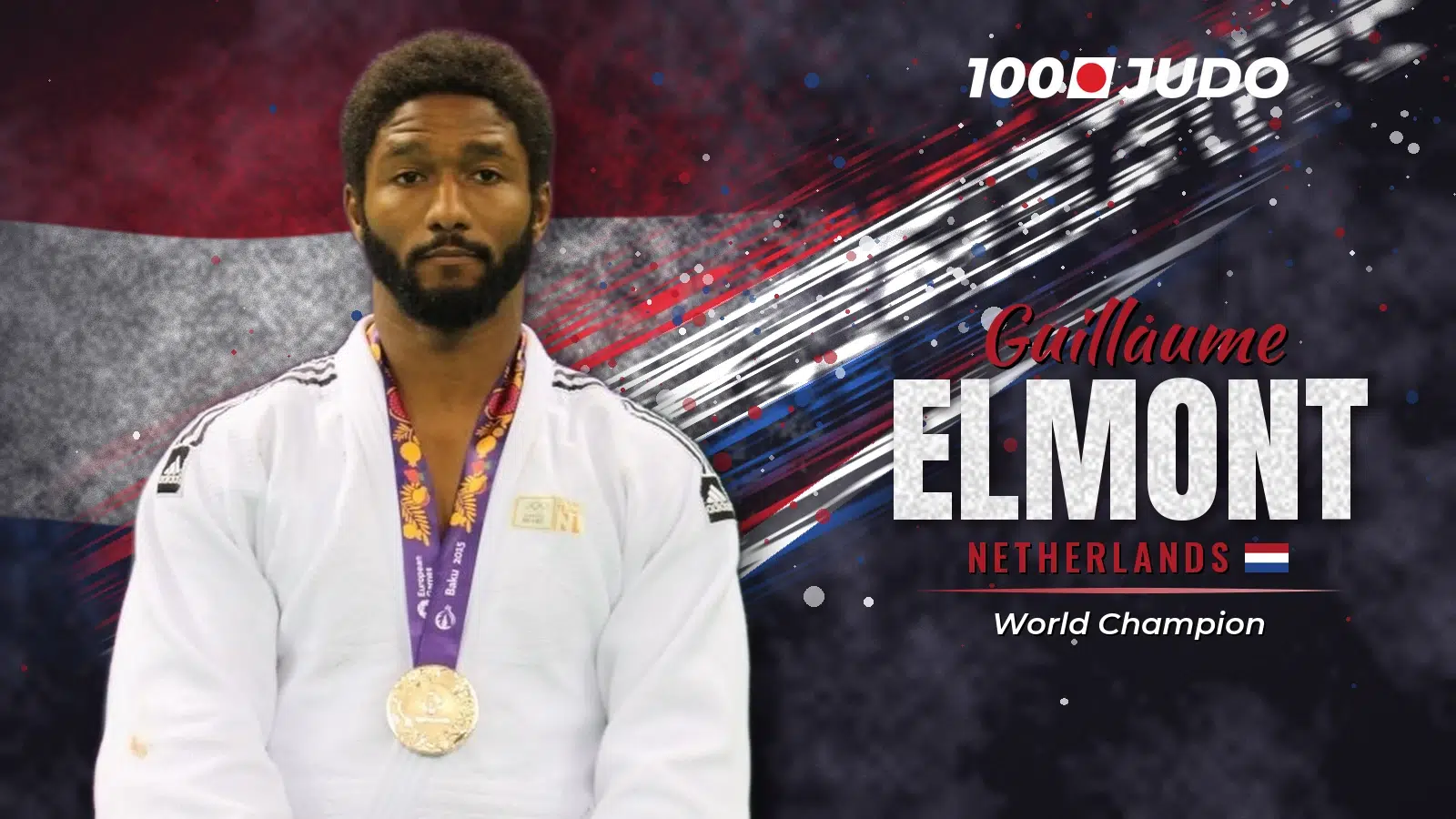
Guillaume Elmont: from Cairo gold to Papendal
In October 2015 a torn biceps tendon, picked up during a workout at his job, ended Guillaume Elmont‘s career at 34. He was still chasing a ticket to Rio. Ten years later the same man was handed the keys to Dutch elite judo, with the task of making sure the next generation reaches the start line in better shape than he left it.
Elmont did not choose that ending, and he said so at the time. “If you’re into judo for so long, you want to decide for yourself what is your last game,” he told JudoInside after the injury. What followed was a second career built around exactly that question: how do you give athletes control over their own peak?
A Rotterdam boy with judo in the blood
Born in Rotterdam in 1981, Elmont is the son of the Surinamese judoka Ricardo Elmont and the brother of Dex Elmont, who also became an international judoka for the Netherlands. Guillaume was the first to break through. He became European U20 champion in Nicosia in 2000 and won his first Dutch senior title the year after. He then kept winning it, eleven times in a row up to 2011, a run that says as much about his consistency as about his level.
The September that made him world champion
The breakthrough came at U81kg in 2005. In February he won the Tournoi de Paris, and on 9 September he beat Abderrahmane Benamadi of Algeria in the final of the World Championships in Cairo. Takashi Ono of Japan took bronze in the same category. Elmont was 24 and the Netherlands had a new world champion in one of the deepest weight classes in the sport.
He proved it was no accident. A second Paris title followed in 2007, along with world bronze in Rio de Janeiro the same year and European silver in Lisbon in 2008. He went to three Olympic Games, in 2004, 2008 and 2012, and his best finish was fifth in Beijing. The Olympic medal never came, which is the one gap in an otherwise complete record.
Late in his career he moved up to U90kg and showed he could still win against heavier men: gold at the Grand Slam Baku in 2014 and bronze at the European Games in the same city in June 2015, a few months before the injury.
The psychologist behind the champion
What makes Elmont unusual is what he did off the mat. While still competing at the top he completed a degree in psychology. After retiring he became performance coach at Ajax, working with elite footballers instead of judoka, and later built a business in performance optimisation and talent management.
That route explains why the Dutch federation turned to him. From 1 May 2025 Elmont became Director of Elite Sports at Judo Bond Nederland, responsible for both judo and jiujitsu, as JudoInside reported on the day of his appointment. “Judo is my passion, and I am returning with great energy to contribute to the future of our sports,” he said in the federation’s announcement. The world champion of Cairo now works at Papendal, where the careers of the next Dutch medal hopes are planned.
Back to the overview