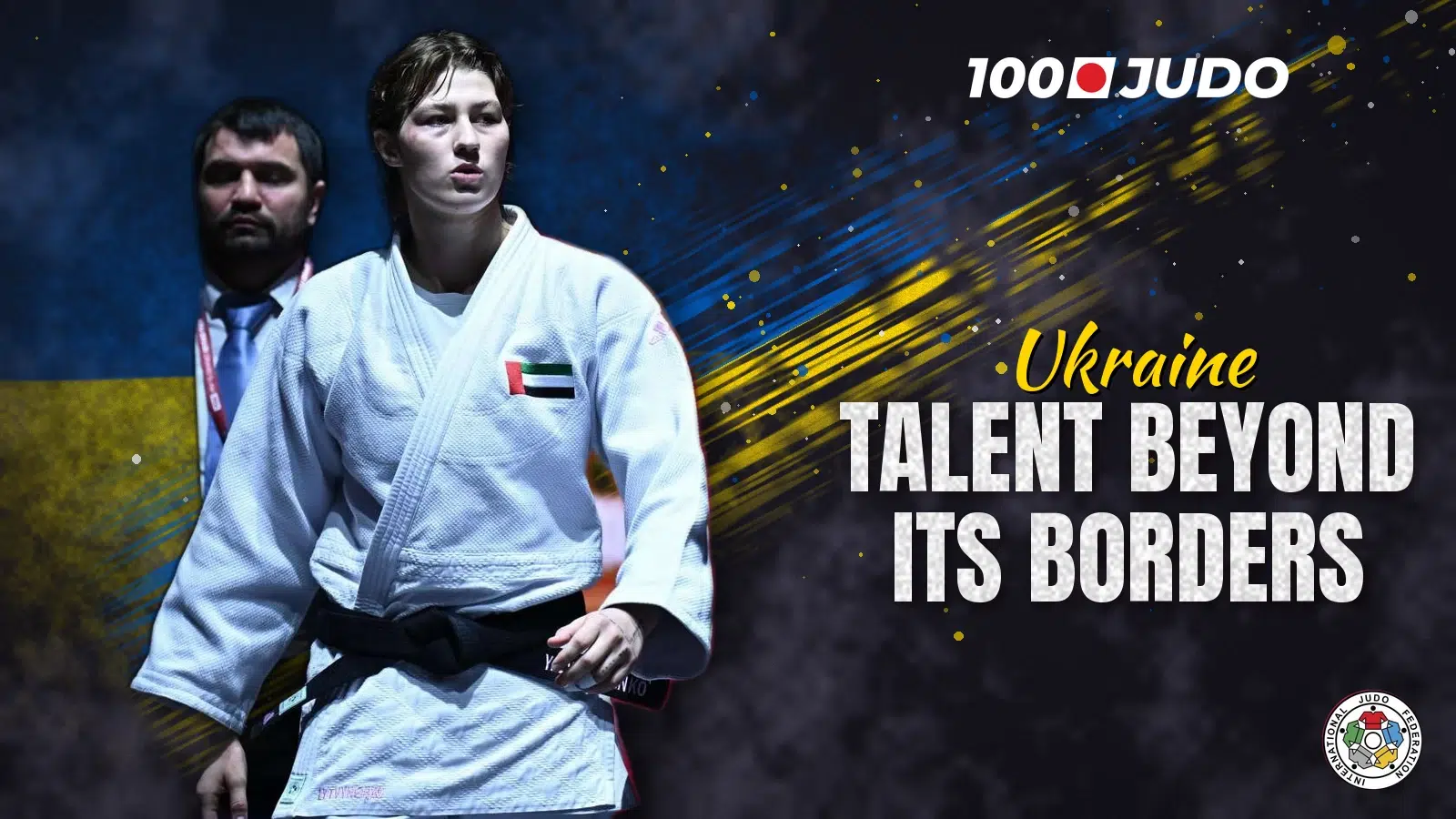
Made in Ukraine, crowned elsewhere
Yelyzaveta Lytvynenko became world champion at U78kg in Baku this week, beating Kaila Issoufi of France with two waza-ari, and the anthem that followed was the UAE’s. Two years earlier Zelym Kotsoiev won the world title in Abu Dhabi and then Olympic gold in Paris, and the flag on his back was Azerbaijan’s. Both learned their judo in Ukraine. Between them they hold the two most recent world titles produced by the Ukrainian system, and neither sits in Ukraine’s medal table. That is the story of the country’s judo in one sentence: a talent factory whose best products keep leaving before the senior harvest.
The numbers behind the factory are real. Over the past twenty years Ukraine ranks third in the world for IJF Cadet World Tour medals, behind only Russia and Italy, ahead of Türkiye, France, Hungary and Azerbaijan. The names come in waves: Diana Semchenko, EYOF champion in 2022 and European U23 silver medallist in 2024; Anastasiia Superson, world cadet champion at U40kg in Sarajevo in 2022; Stanislav Korchemliuk, EYOF champion the same year; Khazar Heydarov, European cadet silver and world cadet bronze in 2024, EYOF champion in Skopje in 2025 and European cadet champion at U60kg in Gran Canaria this year. Nobody doubts the production line. The question is where the finished article ends up.
Nine years from Sarajevo to Paris, under a different flag
Kotsoiev is the template. Born in North Ossetia in 1998, he followed his older brother into Ukrainian judo and won European cadet bronze in Tallinn in 2013 and cadet gold in Athens in 2014 for Ukraine. In 2015 he switched to Azerbaijan, won the European cadet title at U90kg in Sofia and world cadet silver in Sarajevo, and the rest of the climb, junior world champion in Zagreb in 2017, Grand Prix gold in Ulaanbaatar as early as 2016, European senior bronze in 2018, world podiums in Tashkent and Doha, happened in Azerbaijani colours. Nine years separate the cadet silver in Sarajevo from the Olympic gold in Paris. Ukraine paid for the first chapter and Azerbaijan collected the last.
Lytvynenko compressed the same arc. World bronze in Tashkent in 2022 as a teenager for Ukraine, seventh at the Paris Olympics for Ukraine, then a change to the UAE in 2025. In 2026 alone she has won Grand Slams in Dushanbe and Ulaanbaatar, reached the finals in Paris and Lausanne, taken Asian silver and now the world title, the first in the Emirates’ history. The Tsurkan family from Odesa took a different route for the same reason: they moved to Slovenia in the winter of 2021, before the full scale invasion, and Ilariia, EYOF winner for Ukraine in 2025, is now a European cadet champion and world cadet medallist for Slovenia, while her brother Igor carries European junior silver and bronze from his Ukrainian years into the harder senior transition.
Bilodid stayed, and the question that remains
The counter example is Daria Bilodid, who never left. European senior champion at 16, world champion at 17 in Baku in 2018, the youngest in the sport’s history, a second world title in Tokyo in 2019, Olympic bronze in 2021, a European title at U57kg in Zagreb in 2024 and then, after a round of 16 exit in Paris, a step away from the mat and a year with the football club Metalist 1925. Reports in August said she was training with the national team again. If she returns, Ukraine’s only recent senior world champion under its own flag will be 26 and starting over.
Medal tables record the flag an athlete wore on the day, not the country that built them, and by that measure Ukraine looks smaller than it is. The useful analysis is still to be done: how many of those cadet medallists reach a senior world top eight, how long it takes them, how many survive a full Olympic cycle, and how many do it for someone else. On the evidence of Baku, the answer to the last question is the one that should worry Kyiv most.
Back to the overview