Yoshida, the uchi-mata the record undersells
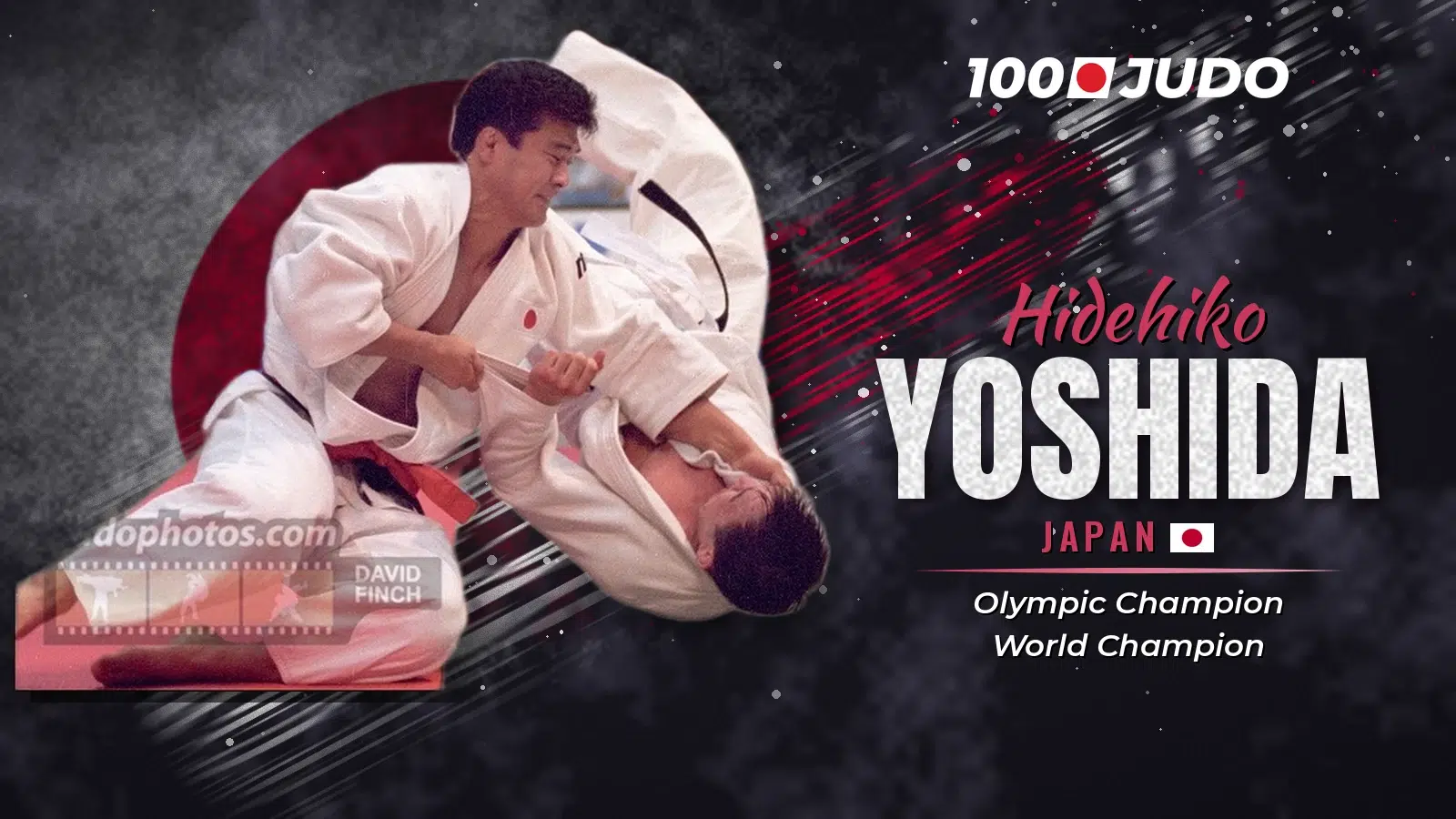
Six contests, six ippons, one Olympic title at the age of 22. Hidehiko Yoshida‘s week in Barcelona in 1992 remains one of the cleanest performances a judoka has produced at a Games, and the final against Jason Morris of the United States showed why: an assertive, technical American was pushed backwards for minutes by the threat of a throw he knew was coming, until the left uchi-mata came anyway and ended it. Thirty four years later Yoshida is still not a name that comes up first when Japanese judo counts its greats, and the reasons say as much about how the sport remembers as about how he fought.
Start with the technique, because that is where the case rests. If Toshihiko Koga was ippon-seoi-nage, Yoshida was uchi-mata, and his version combined timing, lift and acceleration in a way that made the movement look unforced even as it put men on their backs. Opponents knew exactly where the danger was and it protected them very little, because he built combinations around the throw that made defending it a trap of its own. Born in 1969, he won the Asian title in Damascus in 1988 at U78kg and took bronze at his first World Championships in Barcelona in 1991, so by the Olympic year the sport had already seen enough to be worried. It had not seen six ippons.
Jeon, twice, and the title that would not come
Then the strange part. Winning the Olympics turned out to be easier for Yoshida than winning a World Championships. In Hamilton in 1993 he reached the final with a back problem and lost to a low seoi-nage from Korea’s emerging Jeon Ki-Young, waza-ari, title gone. In Chiba in 1995, healthy and at home, he pressed Jeon with ko-uchi-gari for most of the contest and was then thrown with o-soto-gari for ippon. Atlanta 1996 was worse: Adrian Croitoru of Romania, a man Yoshida had beaten before, caught him with tani-otoshi in the first round, and in the bronze contest after the repechage Marko Spittka of Germany armlocked him into a serious arm injury. Two world finals lost, an Olympics lost, three years largely out of sight.
The comeback is the part that should settle the argument. In Birmingham in 1999, eight years after his first world medal and seven after Barcelona, Yoshida beat Carlos Honorato of Brazil in the final and was world champion at last, by then with four World Championship medals, two Tournoi de Paris titles from 1993 and 1995, and a career that had run from U78kg through U86kg to U90kg. Sydney 2000 then repeated the Atlanta script in a crueller form: Honorato, again, threw a huge uchi-mata in the quarter final, Yoshida put his arm out to save the score and fractured it, and the Brazilian went on to silver.
Why the record undersells him
Two things pushed him out of the conversation. The first is what came after: in 2002 he went into professional mixed martial arts, became one of the big draws of the PRIDE era in Japan and later founded the Yoshida Dojo rather than entering the national coaching structure, so a generation of fans met him as an MMA fighter first. The second is arithmetic. The Japanese champions who followed collected more world and Olympic titles, and one plus one does not look like greatness on a spreadsheet. Neil Adams, one world title and two Olympic silvers, suffers from the same sum and was feared by everyone who fought him. So was Yoshida. Three world finals across eight years, a title won after two painful defeats, three weight categories, serious injuries survived, and the ability to beat the best in the world more than a decade after he first appeared. The medals tell you he was a champion. The footage, and the men who tried to stop that uchi-mata, tell you he was something rarer.
Back to the overview