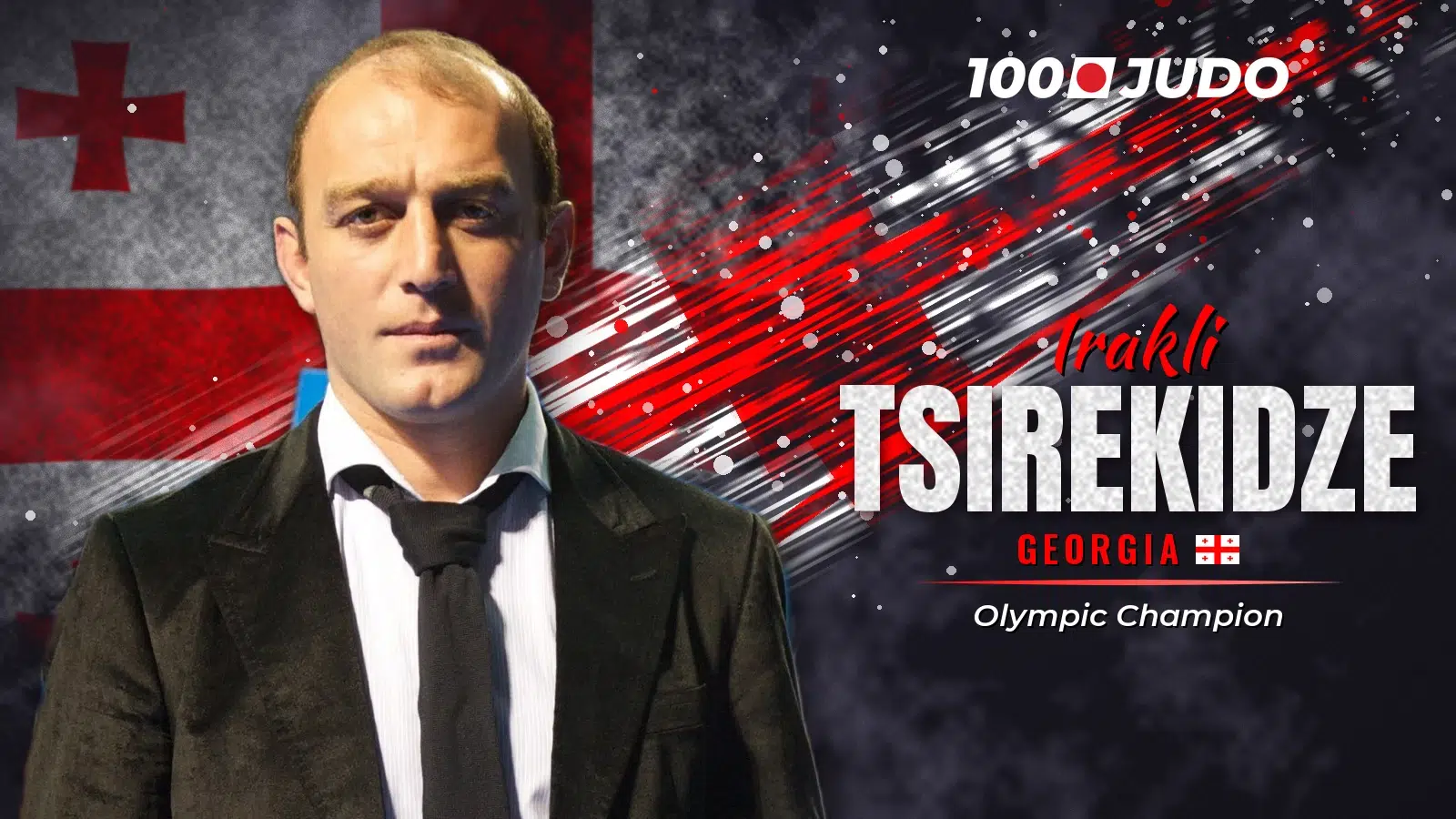
Irakli Tsirekidze and the Kutaisi dream
When Irakli Tsirekidze came home from Beijing in August 2008, the Georgian national phone company offered him an exclusive phone number. He has kept it ever since. That small perk belongs to a much bigger story, one that started in the western city of Kutaisi long before he stepped onto an Olympic mat.
Kutaisi already had an Olympic champion: David Khakhaleishvili, heavyweight winner at Barcelona 1992. In an interview with the IJF Media team, Tsirekidze explained what that did to a whole city: “Because of him, the dream and goal of every child in Kutaisi was to become an Olympic champion.” Both men were trained by the same teacher, Omar Merabishvili, whom Tsirekidze calls probably the best he could have had.
The hardest worker in the room
What set him apart, by his own account, was a refusal to finish second at anything. Timed runs, hill climbs in the Georgian mountains, daily club sessions: he wanted to win all of them. He sometimes started slower than his team mates on those climbs, he told the IJF, yet “I would reach the peak before them all 100 times.” Each small victory fed the belief that he was one step ahead of everyone else.
The results followed at U90kg. Born on 3 May 1982, he won World Cups in Tbilisi and Lisbon in 2006 and in Warsaw in 2007, then took European silver in Belgrade in 2007. Like many Georgians he came to judo with a base in national wrestling, which he says helped his generation create a different judo style.
Beating an Olympic champion in Rio
At the 2007 World Championships in Rio de Janeiro he became world champion, beating Greece’s Ilias Iliadis, the 2004 Olympic champion, by a yuko. That made him the man to beat at the 2008 Olympic Games in Beijing, where Olympedia lists him as the favourite.
On 13 August 2008 he got through four rounds, including wins over Uzbekistan’s Khurshid Nabiev, Australia’s Daniel Kelly and Egypt’s Hesham Mesbah, who went on to take bronze. Then the draw handed him a surprise finalist, Amar Benikhlef of Algeria. Tsirekidze later admitted the danger in that moment: he thought Benikhlef’s place in the final might be a mistake, and “Those thoughts could have cost me the gold medal.” They did not. The final was decided by the smallest possible margin, a penalty against Benikhlef, and Georgia had its second Olympic judo champion from Kutaisi.
A career that never really ended
He moved up to U100kg and kept winning medals: Grand Slam bronze in Paris in 2010 and Tokyo in 2011, world bronze in Paris in 2011, European bronze in Istanbul the same year and Grand Slam gold in Rio de Janeiro in 2012. Rio, scene of his world title five years earlier, gave him his last big win.
Coaching came next, first with young judoka and later at senior level, often alongside old team mates from the national squad. In the interview published on JudoInside as Olympic Champions: Irakli Tsirekidze, he describes that work as the reason his career feels “kind of everlasting”. The Kutaisi chain that began with Khakhaleishvili now runs through his own students.
Back to the overview