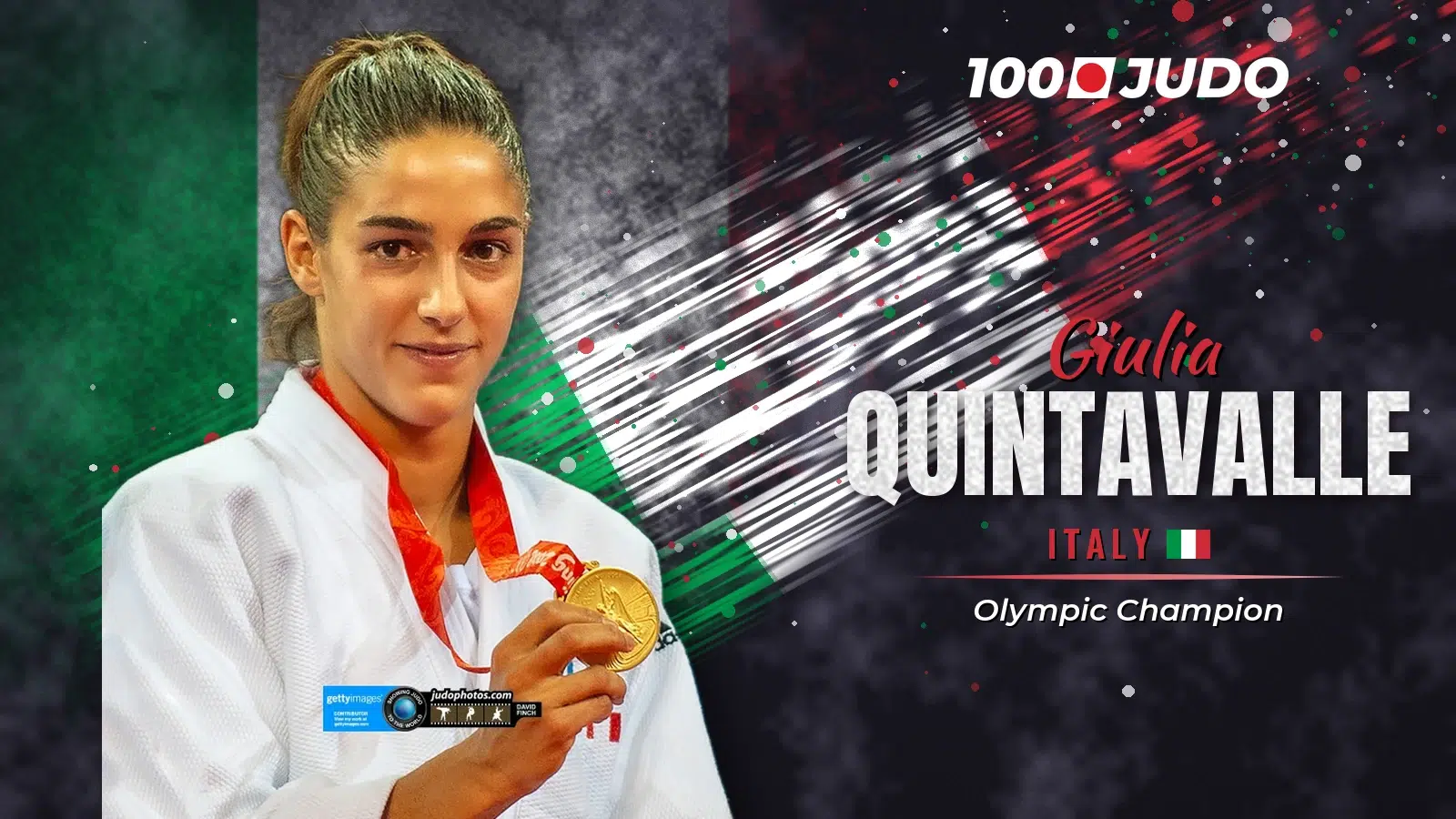
Giulia Quintavalle started with the champion
The draw in Beijing gave Giulia Quintavalle the worst possible first contest: Yvonne Boenisch of Germany, the reigning Olympic champion at U57kg. The Italian had never won a world medal. Five contests later she was the one wearing the gold.
Quintavalle, born in Livorno on 6 March 1983, came to the 2008 Games as a solid international without a big title. She had started judo at the age of five, alongside her twin and following an older brother onto the mat, and had won the Italian title at U63kg before dropping to U57kg. At the 2007 World Championships in Rio de Janeiro she finished fifth after losing in the quarter-finals.
A counter against the champion
Boenisch had won in Athens four years earlier and was the obvious favourite in that opening bout. Quintavalle answered the German’s kosoto-gake with a perfectly timed ouchi-gari counter, scored waza-ari and held the lead to the end. Beating the champion in round one changed the whole shape of her tournament.
From there she worked through the draw without a loss: Khishigbatyn Erdenet-Od of Mongolia, Barbara Harel of France and, in the semi-final, Austria’s Sabrina Filzmoser. The Mongolian was beaten by ippon, the other two on smaller scores, and suddenly the outsider from Livorno had a place in the Olympic final.
One osoto-gari in the final
Her opponent in the final at the 2008 Olympic Games in Beijing was Deborah Gravenstijn of the Netherlands, a world medallist and bronze medallist in Athens, older and far more experienced. Gravenstijn collected a shido for passivity, which gave Quintavalle a koka. At the three-minute mark the Italian committed fully to osoto-gari and drove Gravenstijn onto her side for yuko. That score decided the gold on 11 August 2008.
The win made her Italy’s third Olympic judo champion, after Ezio Gamba in Moscow 1980 and Giuseppe Maddaloni in Sydney 2000, and the first woman among them.
Life after the upset
The years after Beijing were harder. She went out early at the World Championships of 2009, 2010 and 2011, yet still won the Grand Prix in Abu Dhabi in 2011 and World Cups in Lisbon and Rome that year. At the 2012 Olympic Games in London she reached the bronze medal contest and finished fifth. Her last World Championships came in Astana in 2015.
JudoCrazy retold that Beijing run for JudoInside in Giulia Quintavalle turned the odds at the 2008 Beijing Olympics. Today Quintavalle is heavily involved in the IJF Judo Academy.
Back to the overview