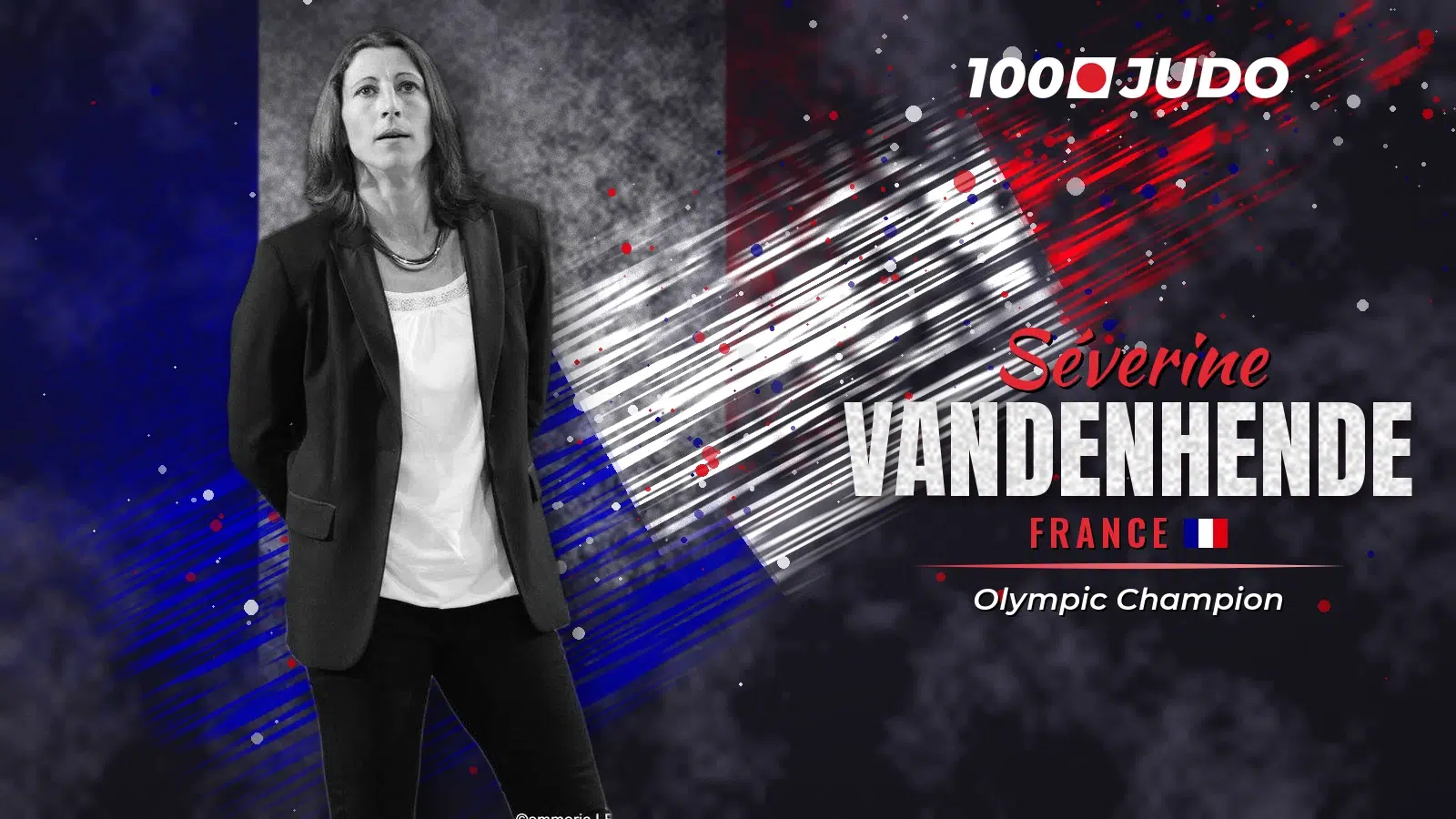
Séverine Vandenhende and the art of control
On 19 September 2000 in Sydney, Séverine Vandenhende needed five wins in a single day to become Olympic champion at U63kg. The fifth came against China’s Li Shufang, a judoka who won two of their three career meetings, and the French judoka took the final without the kind of throw that ends up on highlight reels. Grips, patience and control had carried her to the top, and they would shape her work long after she stopped competing.
Born on 12 January 1974, Vandenhende came through the French system at U61kg. She took bronze at the 1992 World Junior Championships in Buenos Aires and silver at the European Junior Championships in Jerusalem that same year, then spent the mid-1990s collecting podiums at the Tournoi de Paris and won the world university title in Jonquière in 1996.
World champion in her own capital
The breakthrough came in 1997. After European bronze in Oostende in May, Vandenhende went into the World Championships in Paris as the home fighter and went through the U61kg draw without a defeat. She beat Celita Schutz of the United States, Japan’s Hiroko Kitazume, China’s Qin Yuying and Spain’s Sara Álvarez, then Gella Vandecaveye of Belgium in the final. At 23 she was world champion in Paris, in front of a crowd that had come to see exactly that.
Vandecaveye became the recurring name in her story. According to the head to head record on JudoInside the two met three times. Vandenhende won the one that mattered most, the Paris final, while the Belgian took their other two meetings, including the 2000 European final in Wroclaw four months before the Olympic Games.
A new weight and three lost finals
From 1998 Vandenhende fought at U63kg and won the Budapest Bank Cup in her first months there. Her Olympic season then produced a string of near misses: silver at the Tournoi de Paris, silver at the Grand Prix Città di Roma and silver at the European Championships. Three lost finals in a few months could have looked like a warning sign.
In Sydney the pattern broke. Her day began with an ippon win over South Korea’s Jung Sung-Sook, who later fought back through the repechage to take bronze. She then beat Canada’s Sophie Roberge, Schutz once more and Germany’s Anja von Rekowski before the final against Li. Vandecaveye, meanwhile, lost to Li in the other half of the draw and finished with bronze, so the rivalry never reached the Olympic mat in Sydney. JudoInside describes her style as built on physical strength, dominant gripping and tactical patience, and her Olympic day fits that description contest by contest.
From the mat to the chair
Vandenhende kept competing until 2003, with bronze at the Super A-Tournament in Moscow among her last results, and then moved to the side of the mat. She coached at Red Star Champigny and later with the French national team. The JudoInside career tribute on her birthday names Amandine Buchard, Hélène Receveaux, Priscilla Gneto, Romane Dicko, Shirine Boukli, Marie-Ève Gahié and Sarah-Léonie Cysique among the athletes she celebrated major successes with.

100judo has followed several of them, from the evolution of Buchard’s kata guruma to Boukli’s spell at the top of the U48kg ranking. For those judoka, the voice from the chair belonged to someone who had won a world title at home and an Olympic final against the opponent who usually beat her.
Back to the overview