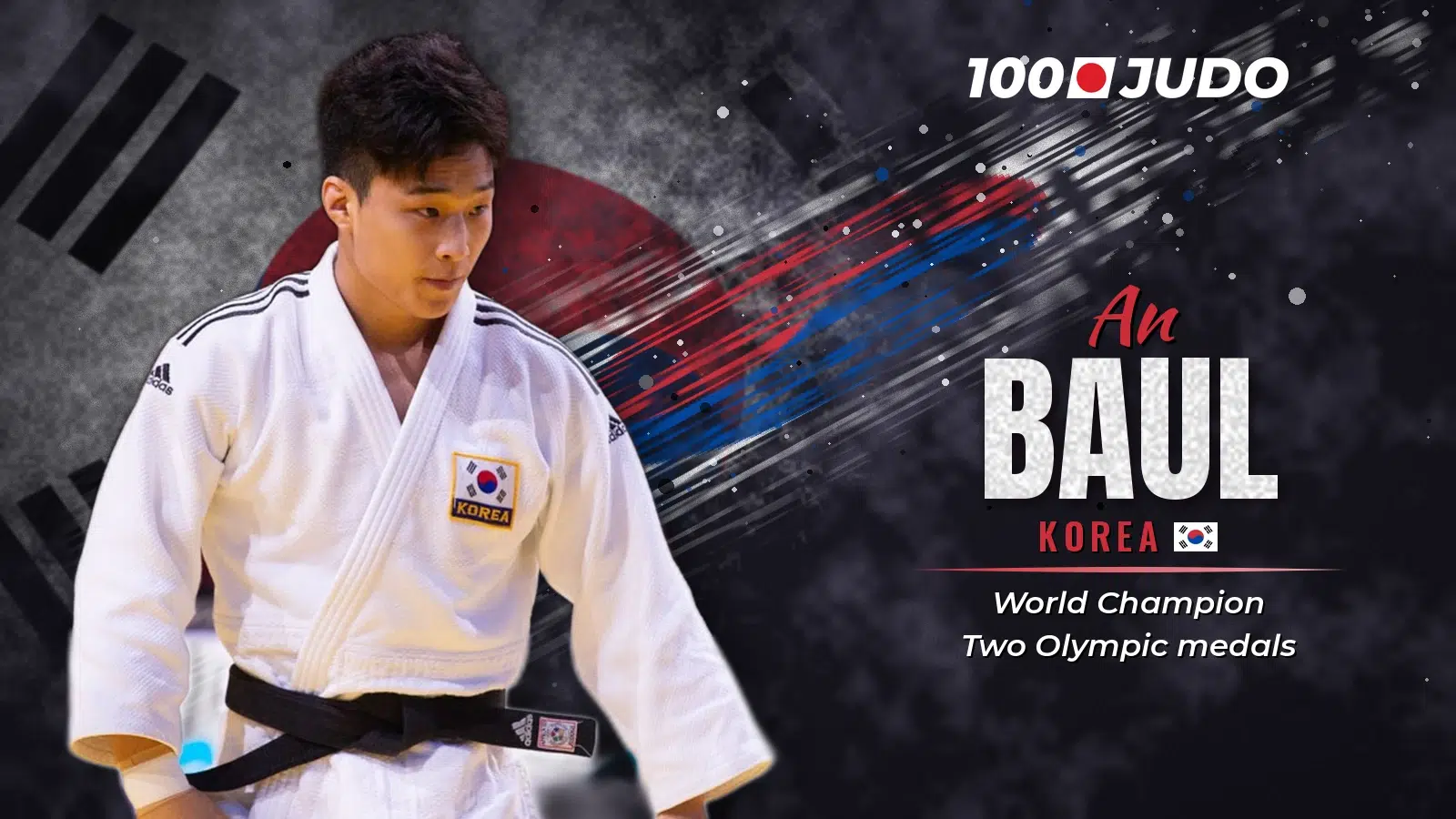
An Baul retires and moves into coaching
An Baul has ended an international career that lasted thirteen years and touched every rung of the sport. World junior champion in 2013, senior world champion in Astana in 2015, Olympic silver medallist in Rio and bronze medallist in Tokyo, four times on a World Championship podium, the 32 year old Korean U66kg is now moving into coaching, where the thing he knows best, how to attack from no space at all, is the thing hardest to put into a manual.
The arc was quick once it started. Junior world silver in 2011, the junior title in 2013, a left knee injury during his university years that interrupted rather than ended him, and then 2015, the year everything landed: world gold in Astana, the Grand Prix in Düsseldorf, the Grand Slam in Abu Dhabi, the Universiade and Asian silver in Kuwait City. The IJF Masters in Guadalajara followed in 2016 and so did the Olympic final in Rio, which he lost. He came back for world bronze in Baku in 2018, Paris Grand Slam titles in 2018 and 2020, the Grand Slam in Tashkent and the Masters in Doha in 2021, Olympic bronze in Tokyo that same summer, and a fourth world medal in Tashkent in 2022. Paris 2024 brought no individual medal, but he fought in the mixed team event and beat Igor Wandtke of Germany on 3 August, which turned out to be close to the end.
Maruyama, Baskhuu and the men he never lost to
The rivalry that defined the second half of his career was with Joshiro Maruyama of Japan, eight meetings, five of them to the Japanese. Against Yondonperenlei Baskhuu of Mongolia he led four to two. Three opponents never beat him at all: Baruch Shmailov of Israel in five contests, Golan Pollack of Israel in four and Sebastian Seidl of Germany in four. Those numbers describe a judoka who did not rely on size or strength, because he had neither to spare. He relied on timing, movement and reading the contest, a compact frame that could launch a seoi-nage from a gap most fighters would not consider a gap.
From primary school in Anyang to the coaching chair
He started judo at primary school in Anyang, represented Namyangju City Hall and trained under Seon Chan-Jong, and the two Asian silvers of 2015 and 2021 and the Asian title in Hong Kong in 2017 fill in a continental record almost as long as the world one. What Korea gets now is a coach who has stood in a world final, an Olympic final and a Masters final and knows the difference between them. That knowledge is difficult to reproduce from a coaching manual, and the next generation of Korean lightweights will be the first to find out what it is worth.
Back to the overview