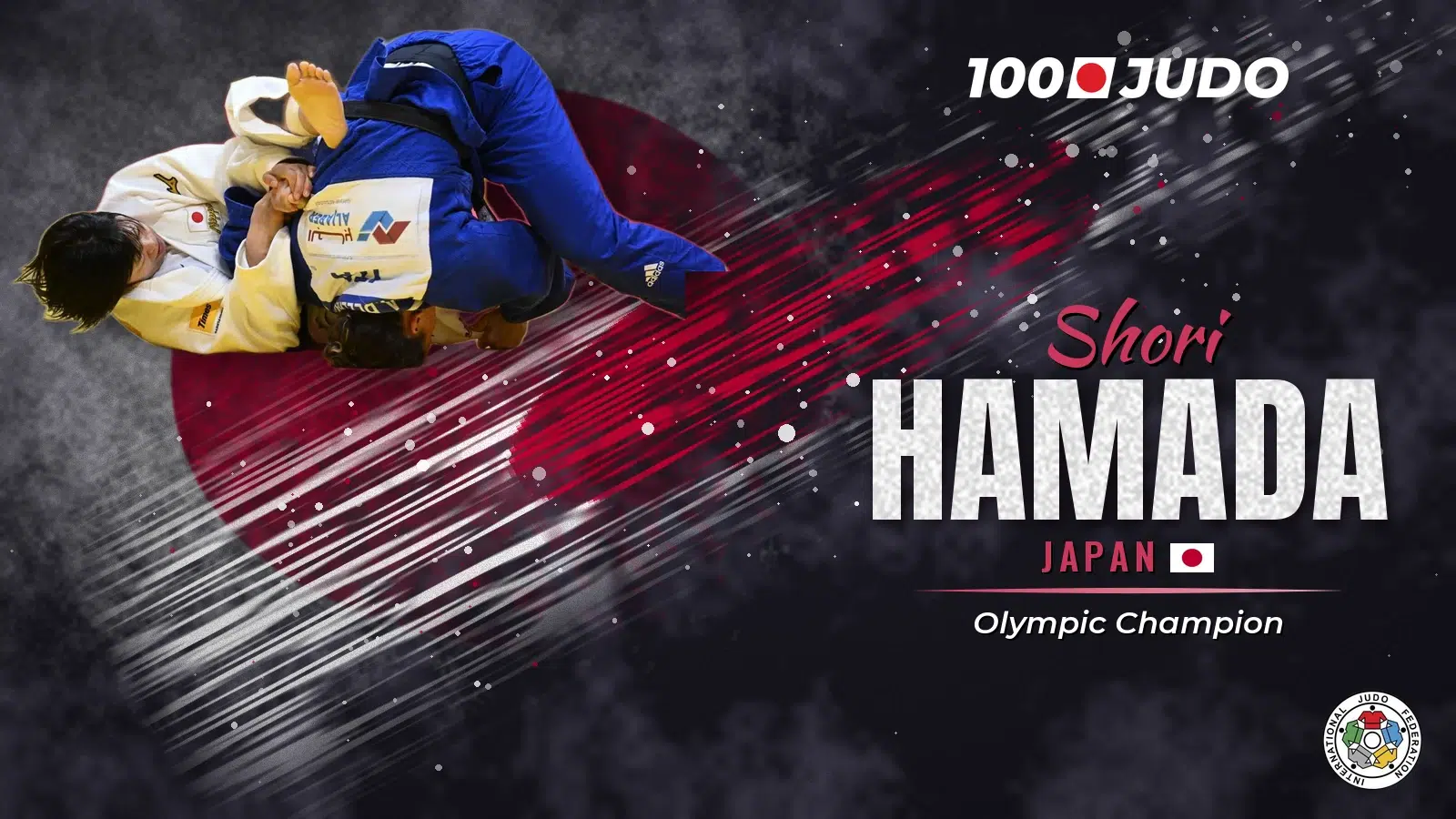
Shori Hamada and the groundwork nobody escaped
Shori Hamada turns 36 today, which in U78kg terms makes her a survivor from another era, and the reason she survived is the same reason she was feared: nobody in the category has ever made the floor as dangerous as she did. Opponents knew exactly where the danger was and still repeatedly found themselves trapped underneath her. That sentence from Oon Yeoh’s portrait of her on JudoInside is the whole analysis in miniature, and it is worth unpacking, because the way Hamada built a complete top level game out of newaza is a lesson the current generation is still learning.
The record first. Asian champion in Hong Kong and Tokyo Grand Slam winner in 2017, world champion in Baku in 2018, world silver in Tokyo in 2019, Olympic champion at home in 2021 at the age of 30, six World Judo Tour titles including Grand Slams in Tokyo, Düsseldorf and Antalya, and a spell as world number one. After the Olympic gold she did not drift away: silver at the Tokyo Grand Slam in 2022, fifth at the Worlds in Tashkent, silver at the Antalya Grand Slam in 2023 and fifth again at the Worlds in Doha. Mayra Aguiar, Audrey Tcheumeo, Natalie Powell and Madeleine Malonga were her contemporaries, and all of them spent years working out how to stay off the mat against her.
Not one hold, but every hold
Most newaza specialists have a signature. Hamada’s strength was that she did not. Osaekomi, shime-waza and kansetsu-waza were all live options from the same positions, which meant an opponent defending the hold down exposed the arm, and an opponent protecting the arm gave up the pin. The second part of the system was transitions: a failed throw, hers or the opponent’s, was never the end of an exchange but the start of the part she preferred, so a standing attack that fell short still fed the ground game. The effect over four minutes was pressure in both directions. Opponents had to attack to win and could not attack without thinking about what happened when they landed. The 2022 win by ude-garami with a shiba lock, still circulating on video, is the clearest example of a technique nobody had planned for because they were busy planning for the others.
Malonga: two defeats standing, one win on the floor
The rivalry with Madeleine Malonga proves the point from the other side. In the 2019 world final in Tokyo the Frenchwoman threw her for ippon with o-soto-gaeshi. In the 2021 World Masters final in Doha she scored waza-ari with o-soto-gari. Twice Malonga won by keeping the contest upright and finishing it there. In the Olympic final in Tokyo a few months later Malonga opened with o-uchi-gari, the fight went to the ground, Hamada took control and held her for ippon. One transition decided an Olympic title, and it decided it in the direction every opponent had spent a decade trying to avoid.
The World Championships return to Baku this autumn, eight years after her first world title there, and Hamada is still fighting at an age when most of her generation has moved to the coaching chair. The lesson of her career is not that groundwork wins by itself; it is that a judoka whose newaza is complete changes how everyone else has to fight standing up, and that advantage does not fade with the legs.
Back to the overview