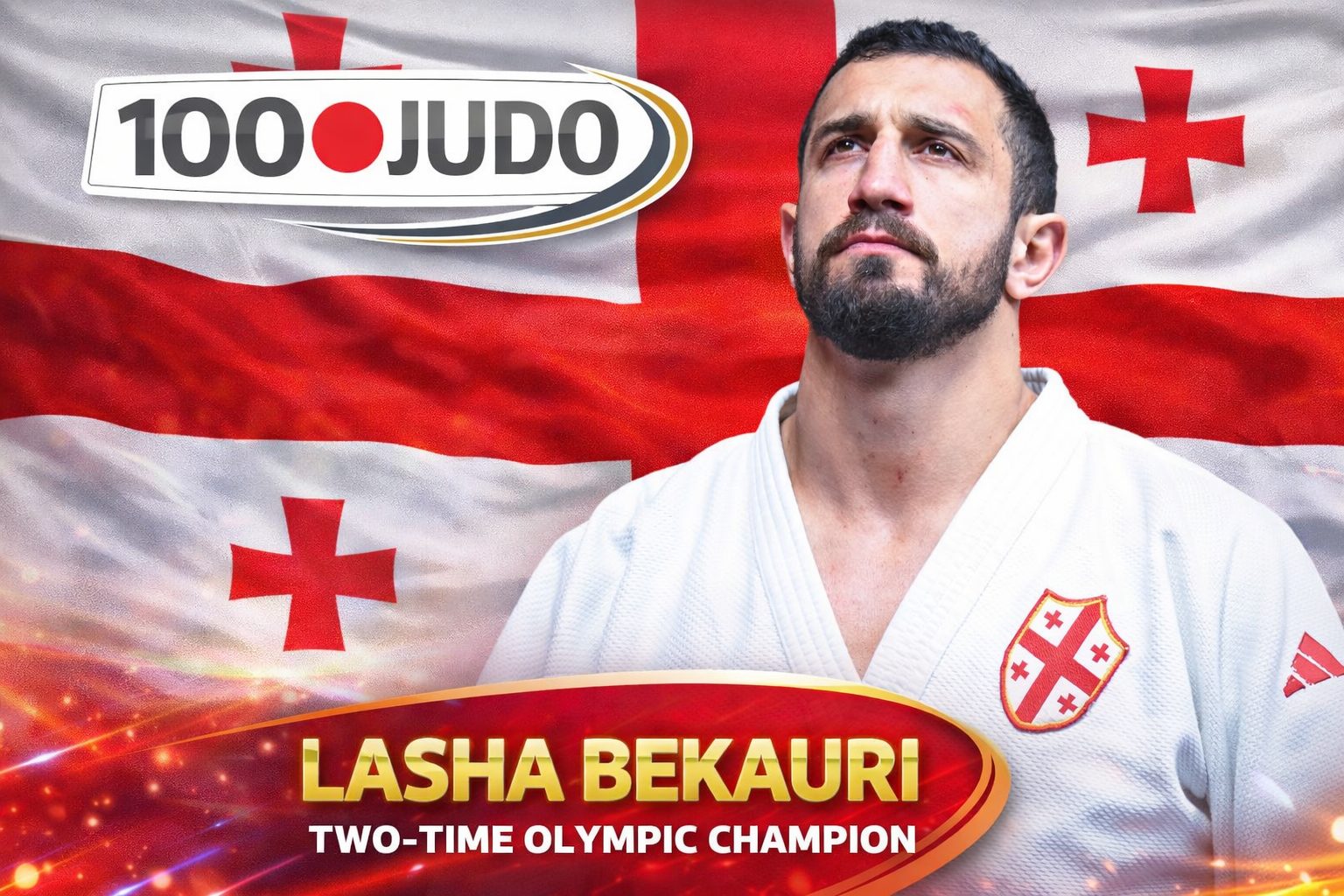
Lasha Bekauri: Olympic king, what’s the 2026 outlook
If judo had a highlight reel superstar of the last six years, Lasha Bekauri would be right at the top of it. Since exploding onto the scene in 2019 by winning the Judo World Masters in Qingdao, the Georgian has treated the sport’s biggest stages like personal property. Grand Slams, Europeans, Masters, Olympics. Tick, tick, tick.
Bekauri picked up his first Grand Slam title in 2021 and never really looked back. Three more followed, including the most recent one in Abu Dhabi. He became European champion in 2021, added a second World Masters title in 2023, and then did the thing that truly separates stars from legends. He won Olympic gold. Twice. Tokyo 2021. Paris 2024. Same weight. Same swagger.
And yet, there is still one box left unticked.
Strangely for an athlete this dominant, Bekauri has never won a world title. His closest call came in 2023, when he reached the final and lost to his teammate Luka Maisuradze. He also owns a world bronze from 2022, but the gold is missing. For someone with two Olympic titles, that absence feels loud.
After Paris 2024, Bekauri did something rare for modern champions. He stopped. No rushed comeback. No forced appearances. He took time away until May 2025. When he returned, he did it quietly, at the Benidorm World Cup, a Continental Open that usually flies under the radar. Smart choice. Lower pressure. One tournament. One win. Job done.
Then came Budapest. And suddenly, questions. Bekauri lost his second contest at the 2025 World Championships, an early exit that had people whispering the dangerous phrase every champion eventually hears. Is he past his peak?
The answer came fast. And loud.
At the Abu Dhabi Grand Slam, Bekauri looked like Bekauri again. Unorthodox attacks. Weird angles. Throws that make coaches shake their heads and fans hit replay. He did not just win. He reminded everyone that his judo does not age like normal judo.
Technically, Bekauri is pure Georgia. He loves reaching across the right shoulder, locking onto the belt and imposing the famous Georgian grip. From there, Khabarelli is always a threat, but that is only the start. He mixes in unusual takedowns, off rhythm attacks and variations that feel improvised but are anything but. Ironically, one of those variations is the same style of takedown Maisuradze used to beat him in the 2023 world final.
Like many Georgian heavy throwers, newaza is not his favourite playground. But when your standing game can end fights in seconds, groundwork becomes optional rather than essential.
At just 25 years old, Bekauri still has time on his side. One more Olympics feels guaranteed. Two is not unrealistic. That naturally leads to the big comparisons. Can he match Tadahiro Nomura and Teddy Riner with three Olympic gold medals? Maybe even go beyond? It sounds bold, but so did two Olympic titles once.
Before all that, though, there is unfinished business. A world title. One missing piece in an otherwise outrageous collection.
If Bekauri is hunting anything in 2026, it is not records.
It is gold that still owes him a visit.
Check out his training sessions. Ruthless!
Back to the overview