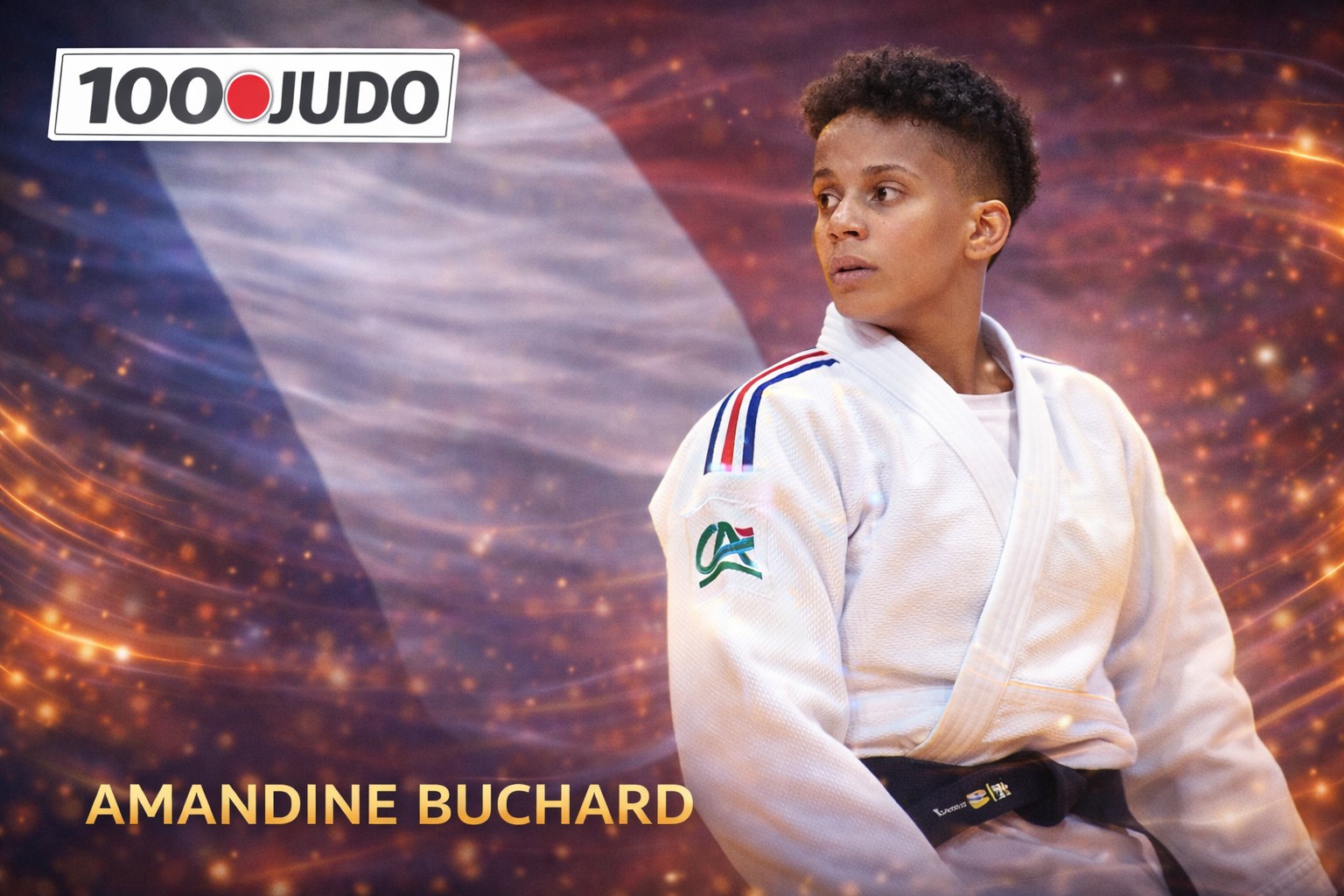
The Evolution of Buchard’s Kata-Guruma
Some judoka build careers on variety. Others build them on obsession. Amandine Buchard belongs firmly in the second category. Like Natsumi Tsunoda, who seems to throw the entire world with tomoe nage, Buchard has made one technique her calling card. Drop kata guruma. Everyone knows it is coming. Almost nobody can stop it.
That puts her in a very small and very dangerous club.
For years, Buchard’s drop kata guruma was most lethal when aimed to her right side against left handers. That matchup was perfect. The angles lined up, the grips fell into place and opponents walked straight into trouble. Against right handers, especially strong ones, the throw was harder to force and less automatic. That has changed.

At the recent Grand Prix events in Lima and Guadalajara, Buchard quietly showed the next evolution of her game. Same favourite throw. Same confidence. But now applied just as effectively against right handers, even those who take an extreme right stance.
Grip before throw
Everything starts with the grip. Buchard’s preferred setup for kata guruma is a tight two on one. Her right hand controls uke’s left lapel, her left hand clamps the end of the left sleeve. From there, she dictates distance and rhythm.
Against a standard right hander, she works in ai yotsu. Right versus right. She sinks low, almost ducking under uke’s right arm. Not quite far enough to invite a shido, but close enough to make opponents uncomfortable. When the moment opens, she collapses her right leg, drives hard sideways with her left leg and drops straight into kata guruma. Clean. Fast. Efficient.
This sequence alone already makes her dangerous. But the real problem starts when opponents try to adjust.

Buchard going for the 2-on-1 grip.
Solving the extreme right stance
Against extreme right handers, Buchard does something different. Instead of gripping the left lapel with her right hand, she switches and grabs uke’s right lapel. It becomes a cross grip, paired with her left hand still controlling the end of the sleeve.
It looks awkward. It feels wrong to defend against. And it works.
This cross gripping solution is not new. Russian heavyweights were already playing with it in the early 2000s, and in recent years it was refined and popularised by former world champion Nemanja Majdov. Buchard has now fully absorbed the concept and adapted it to her own drop kata guruma.
From this grip, extreme right handers lose their structural advantage. Their posture is compromised, their base narrows and the moment Buchard drops, the throw is already half done.
When everyone knows and nobody stops it
What makes this evolution scary is not just the technique itself, but what it represents. Against left handers, Buchard’s kata guruma has always been a problem. Now that she has found reliable answers against right handers as well, the list of safe opponents is getting very short.
In Lima and Guadalajara, she did not hide it. She threw everyone with kata guruma. Same entry. Same drop. Same result. It is the purest expression of dominance in judo. Not deception. Not surprise. Repetition.
Amandine Buchard is no longer just a specialist. She is a solved problem for herself and an unsolved one for everyone else.
When a judoka reaches the point where the whole field knows the attack and still cannot prevent it, that is not predictability. That is mastery.

Back to the overview