
Danil Lavrentyev case raises questions after possible Meldonium finding
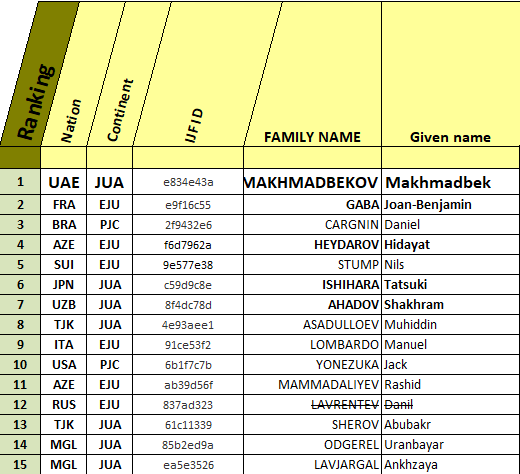
The case of Danil Lavrentyev has drawn attention within the judo community following reports that the Russian athlete returned an adverse analytical finding for Meldonium during the African Open in Casablanca in January 2026.
Lavrentyev, competing as a neutral athlete, finished second in the U73kg category at the event. However, the result is now under scrutiny due to the reported presence of Meldonium, a substance prohibited by the World Anti-Doping Agency since 2016.
Meldonium, also known as Mildronate, is a medication originally developed for the treatment of cardiovascular conditions and is mainly used in Eastern Europe. Its inclusion on the banned list was based on evidence suggesting performance enhancing effects, and it has previously been linked to a number of doping cases across different sports.
Recent Developments Add Context
The discussion around the Lavrentyev case comes shortly after developments involving Matvey Kanikovskiy. The reigning world champion was recently removed from the world ranking following an anti doping violation under Articles 2.1 and 2.2, related to the presence of SARMS LGD 4033, also known as Ligandrol, and its metabolite.
Ligandrol is associated with increased muscle mass and strength and is prohibited under anti doping regulations. The proximity of these cases has led to increased attention within the sport, although each case is assessed individually under established procedures.
Signals from the Circuit
In addition, discussions within the judo community have intensified in recent weeks. In particular, sources from within the Georgian judo scene have circulated informal lists suggesting that several high profile athletes could be under suspicion of using prohibited substances. It is publically known if you look for judo doping at russian sites. These claims involve multiple weight categories and include well known names, although no official confirmation has been provided.
Such information remains speculative and should be treated with caution. However, it has contributed to a growing sense of concern and scrutiny around recent developments.
Observers have also noted that the Russian delegation at the latest European Championships appeared different from previous editions, with several leading athletes absent and others, such as Tamerlan Bashaev, withdrawing shortly before competition due to reported injury. While these situations can occur for a variety of legitimate reasons, the timing has drawn attention in the current context.
Importance of Process and Clarity
At this stage, no final ruling or official sanction has been publicly confirmed in the Lavrentyev case. As with all anti doping matters, due process applies, including analysis, review, and the opportunity for the athlete to respond.
The situation highlights the importance of transparency and consistency as the sport moves forward. With athletes preparing for the qualification cycle toward the Olympic Games Los Angeles 2028, maintaining confidence in anti doping systems is essential.
Looking Ahead
While it is too early to draw broader conclusions, the combination of recent developments ensures that attention will remain on how these cases are handled. Clear communication from governing bodies will be key in providing clarity for athletes, federations, and the wider judo community.
For now, the Lavrentyev case remains a developing story, one that will be closely followed in the coming weeks. Azerbaijani judoka Magerram Imamverdiev was recently banned. Unlike the European champion, Imamverdiev’s disqualification period is already known: he has been suspended for two years. Lavrentyev’s was initially striped through in the IJF World Ranking, but later he was able to compete at the Grand Slam in Tashkent and any suspension has not been announced, but it again raises more questions.
Back to the overview