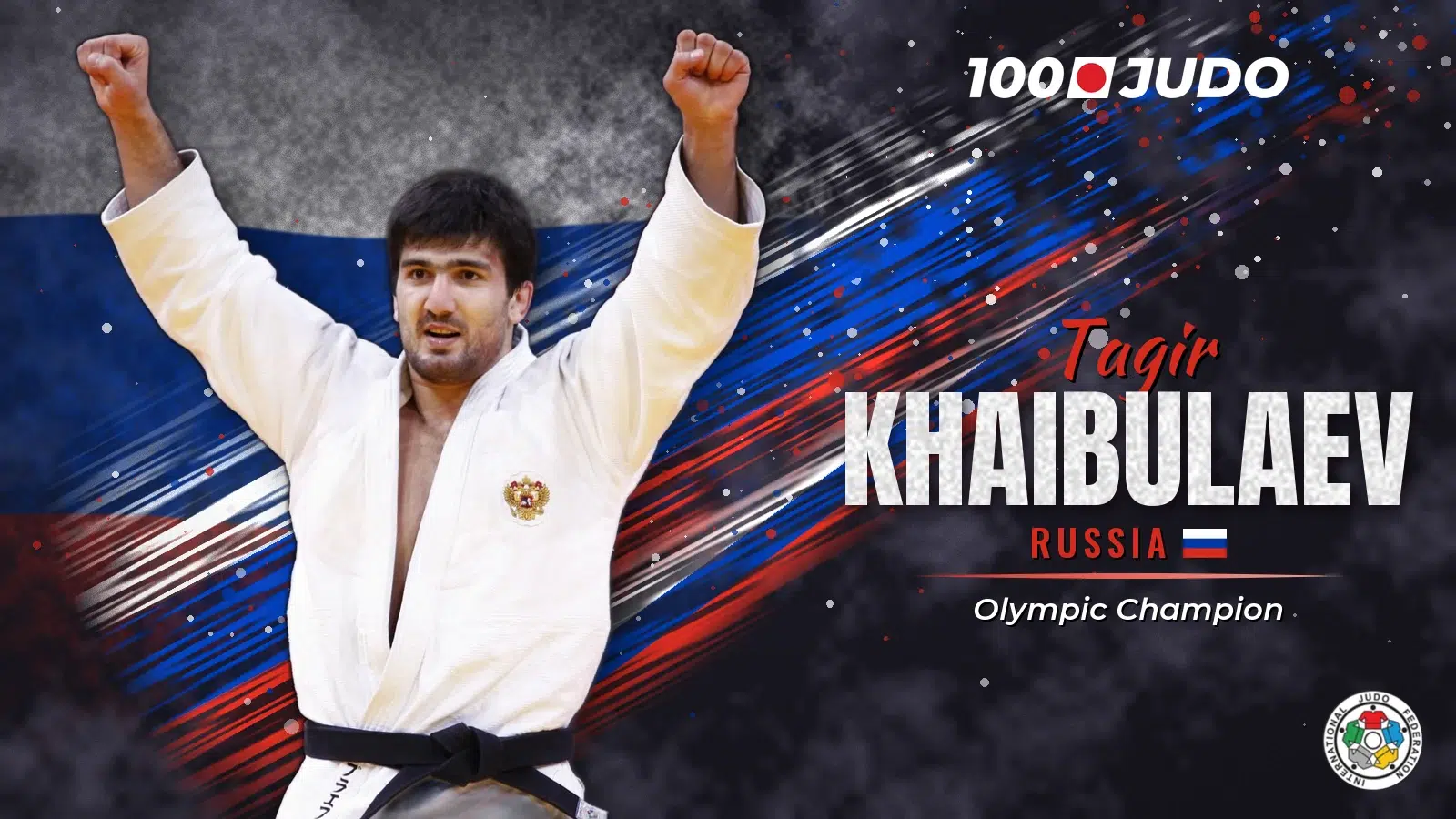
Tagir Khaibulaev and the art of the rematch
In September 2010 Tuvshinbayar Naidan, the reigning Olympic champion from Mongolia, knocked Tagir Khaibulaev out of the World Championships in Tokyo in the last sixteen. Two years later the same two men met in the U100kg Olympic final in London, and this time the Russian walked off with the gold.
That is the pattern of Khaibulaev’s best years. Between 2009 and 2012 the big names of the division beat him once, and then never again when it counted. The world title and the Olympic title both came by way of a rematch.
Rakov, Rotterdam and Paris
Khaibulaev was born on 24 July 1984 in Kizilyurt, in Dagestan, and won the European title in Tbilisi in 2009. At the World Championships in Rotterdam that August he lost in the second round to Maxim Rakov of Kazakhstan, who went on to become world champion.
They met again in the semi-final of the World Masters in Baku in January 2011, and Khaibulaev won. Seven months later, in the final of the 2011 World Championships in Paris, he beat Rakov once more. On the way he had also beaten Dimitri Peters of Germany and Elco van der Geest of the Netherlands, two names that would appear again a year later. The title made him the man to beat, and JudoInside notes that he led the IJF World Ranking during 2012.
London, by way of the same opponents
The London Olympic Games draw put most of his recent history in one day. He opened against Van der Geest, beat Yauhen Biadulin of Belarus, then Lukas Krpalek of the Czech Republic, whom he had already beaten in the World Cup final in Madrid two months earlier. In the semi-final he beat Peters again. Naidan, defending the title he had won in Beijing, waited in the final, and Khaibulaev ended it with an ippon throw.

It was Russia’s third gold of the London judo tournament, after Arsen Galstyan and Mansur Isaev, in the era of head coach Ezio Gamba and his deputy Vitaly Makarov. Four years later Beslan Mudranov kept the run going in Rio.
The ones that got away
Not every rematch went his way. Krpalek beat him in the semi-final of the 2014 World Championships in Chelyabinsk, leaving him fifth after the bronze contest against Karl-Richard Frey of Germany. In Rio in 2016 he lost his first contest to Elmar Gasimov of Azerbaijan. He did win the Grand Slam in Abu Dhabi in 2015, beating Rakov in the last sixteen and Krpalek in the final, a neat summary of how those two rivalries ended.
He turned 42 on 24 July 2026, and JudoInside’s portrait of Khaibulaev at 42 lists the full record. The short version is that the two men who beat him on the way up were both waiting in his two biggest finals, and he beat both.
Back to the overview