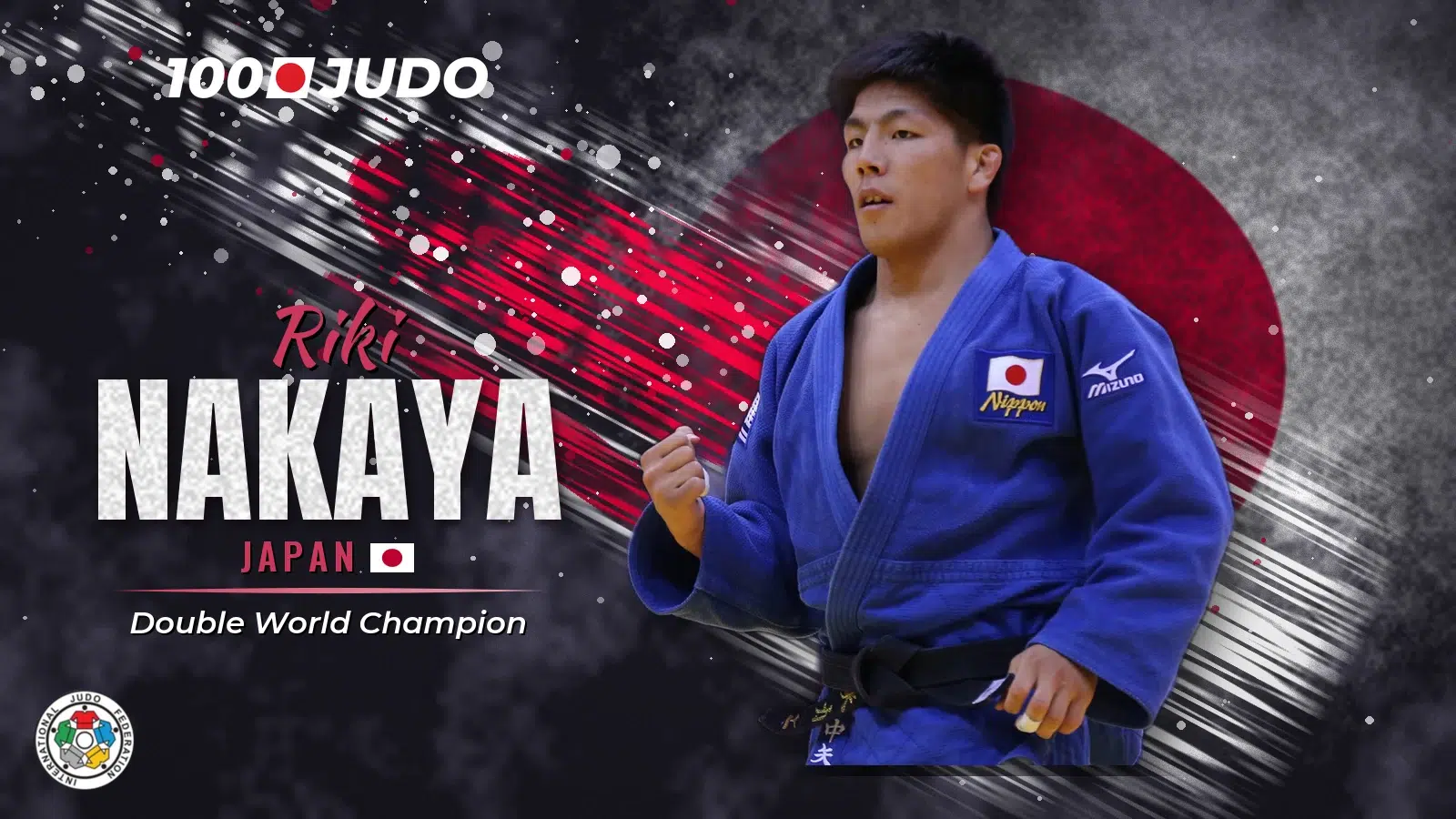
Riki Nakaya, the champion between two eras
In the semi-final of the 2011 World Championships in Paris, Riki Nakaya faced the reigning world champion. That champion, Hiroyuki Akimoto, was also Japanese. Nakaya won, then beat Dex Elmont of the Netherlands in the final and left Paris with his first world title at 22.
That semi-final explains most of what followed. At 1.68 metres, the lightweight from Matsuyama spent his peak years in a division where the hardest opponents often wore the same flag. His record against Akimoto finished 2-3. His record against Shohei Ono finished 0-2. Between those two names lies one of the most successful and least celebrated careers in modern Japanese judo.
The year he barely lost
The 2011 World Championships in Paris were the high point of a remarkable season. According to his JudoInside match record, Nakaya won 29 of his 32 contests that year, adding Grand Slam titles in Paris and Rio de Janeiro to the world crown. In Paris alone he won seven contests on the day, from the opening round against Samoa’s Aleni Smith to the final against Elmont.
London 2012 should have completed the set. Nakaya beat Elmont again in the Olympic semi-final, but Mansur Isaev of Russia beat him in the final. Isaev won both of their meetings, and Nakaya never reached another Olympic Games.
Enter Ono
Four months after London, at the Grand Slam in Tokyo, Nakaya reached another final and met the rising name of the generation behind him: Shohei Ono. Ono won. A year later Ono was world champion in Rio de Janeiro, while Nakaya, also selected, lost in the quarter-final and finished seventh.
Nakaya answered the following summer. At the 2014 World Championships in Chelyabinsk he won five contests and beat North Korea’s Hong Kuk Hyon in the final with an ippon, as JudoInside reported at the time, to become a double world champion.

The final he could not win
At Astana 2015 the two finally met on the biggest stage. Nakaya won four contests to reach the world final, and Ono was waiting. Ono won again, took the gold and went on to win Olympic titles in Rio de Janeiro and Tokyo. For Nakaya it was a third world final in five years and a second loss to the same man.
He kept competing until 2017, with a final silver at the Grand Slam in Baku, and announced his retirement in December 2020. The JudoInside career overview on his 37th birthday called him a forgotten champion, which is fair as a description of his fame and unfair as a description of his record. Two world titles, an Olympic silver and three world finals in five years is the record of a great lightweight who had the misfortune of sharing a decade with Shohei Ono.
Back to the overview